
Advice / Doors / Troubleshooting
How to adjust French doors
An overview of French door alignment and the hardware involved when doors catch or stick.
Published 6 July 2023

French doors that catch, drag or resist closing need to be checked against the instructions for their hardware. This guide looks at alignment and contact pressure; the right adjustment depends on the door system.
What you’ll need
- Allen keys in the correct size
- Screwdriver
- Tape measure
- Bubble level
- A ladder for the petite amongst us
Things to keep in mind
Most French doors operate on a tilt-and-turn mechanism. Maintenance for this style of compound isn’t labour intensive, but keeping the tracks clean and the screws tight go a long way in ensuring your French doors last. It’s also wise to stay aware of the typical problem areas, these include:
- The handle (and its accompanying locking cams)
- The lower bearings (this is usually located at the door’s bottom corner, at the opposite end to the handle)
- The upper bearings (commonly situated at the top of the door on the same side as the lower bearing)
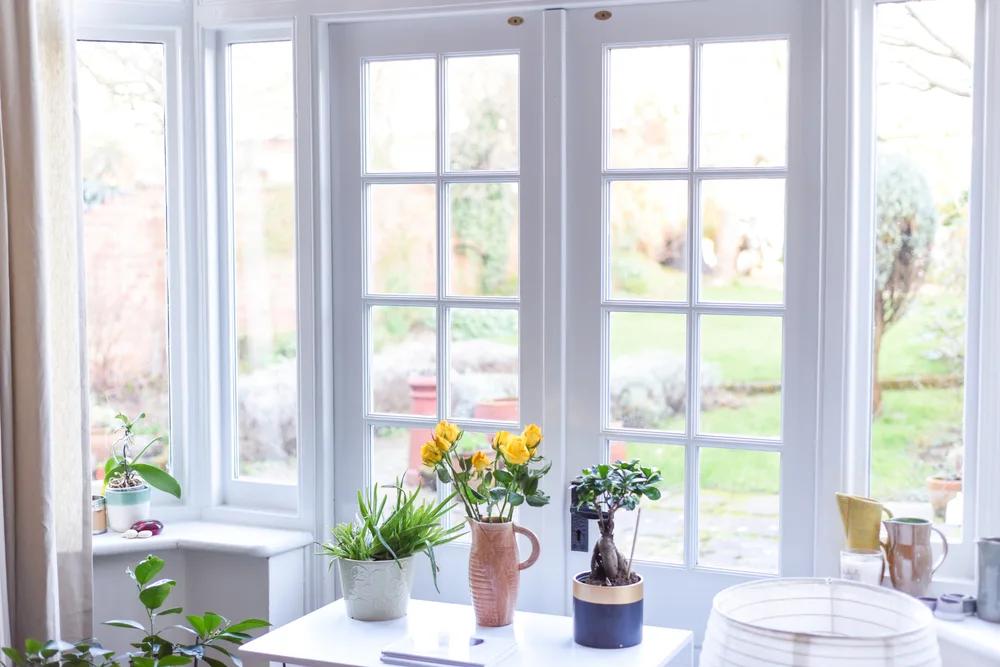
Method 1: Diagonal Casement Adjustment
This is the method you want if the leaf (the main side of the door that swings open and shut) is hitting the doorframe. To rectify this, your French doors need to be adjusted diagonally via its side bearings.
First, note the distance between the dropped leaf door and the frame utilising your tape measure. Then, you will want to extract the plastic cover so you’re ready to access the side bearings.
Using a screwdriver, turn the screws set in the side bearings clockwise to lift the leaf door upward (anti-clockwise if you go too far and find you need to lower it again), and voilà!
Method 2: Parallel Adjustment
This method covers French doors that jam when they are opened and closed. It involves adjusting the leaf horizontally, but this can get a little tricky so an extra pair of hands might be of benefit.
Focusing on the upper and lower bearings, both screws need to be turned alternately. As the screw in the upper bearing is turned clockwise and the screw in the lower bearing is turned anticlockwise, the leaf door will consequently move upward. Back in its correct position, the leaf door should once again smoothly open and close with ease.
Method 3: Adjusting the Contact Pressure
Rather than concentrating on the bearings, this style of adjustment regards the locking pins. These features are located on the side of the door shared with the handle, but more robust safety doors might have them situated on the hinge side.
Draw out these pins and turn them clockwise for a trusty pressure-tight door. If you feel some resistance when trying to open and close the door, simply turn the same pins anti-clockwise until you’re happy with the pressure.
For external doors, the way the seals meet the frame is part of the fitting. Discuss problems with closing or contact pressure with your installer.
Find the right doors for your home
Bring your door ideas to Framemaster. We’ll help you choose the style and opening arrangement, then work through the details for your home.