
Advice / Doors / Choosing and buying
Composite doors or uPVC doors?
Compare construction, appearance and the complete specification when choosing a front door.
Published 27 March 2023
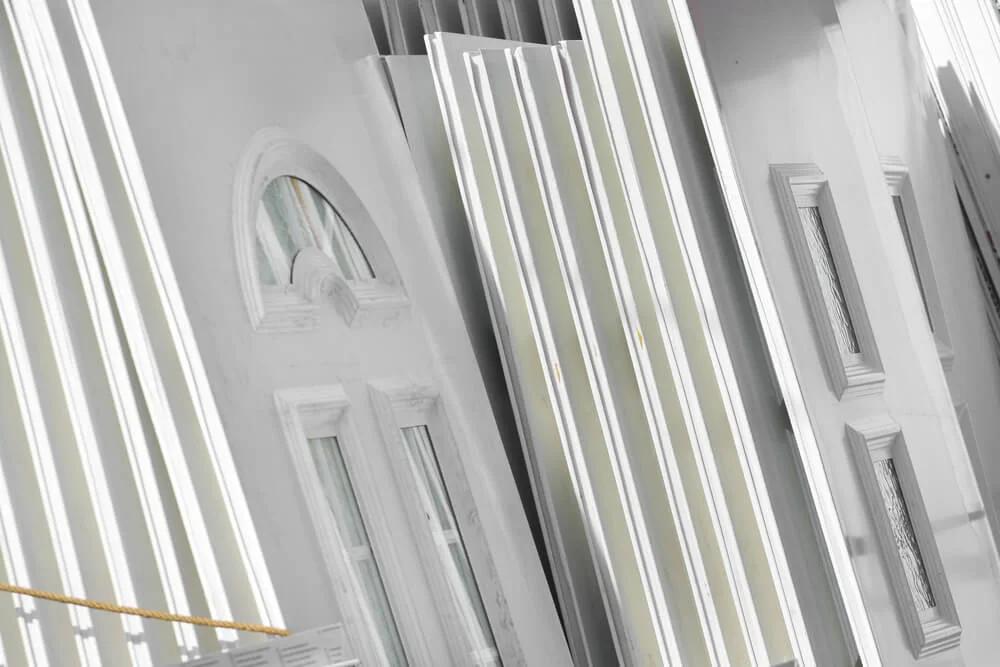
Composite and uPVC doors are both options for a new entrance. Look at the actual door, glass, frame and locking system rather than choosing on the material name alone. This guide covers the main areas people compare.
What is the difference between composite and uPVC doors?
The different materials door manufacturers use to construct composite doors and uPVC doors impact the durability and security of each. uPVC builds are mostly made up of plastic and are favoured by many for their affordability and energy efficiency.
The manufacturing process involves an insulated steel frame that is protected with unplasticised polyvinyl chloride (uPVC) which ultimately creates a well sealed unit. These materials are strong and insulating but can give your door a plastic sheen finish.
Composite doors, on the other hand, are made using a diverse array of materials. Typically, this also includes a steel frame but this time with an additional timber core and foam layer that contributes further to its thermal efficiency. This construction is then encased with glass reinforcing plastic (GRP) in a highly pressurised process. This promises residents a reliable, secure door that endures even the worst of the elements.
Security
Considering the fundamentals that make up each, are composite doors more secure than uPVC?
While uPVC doors are certainly a secure solution with the perk of affordability, composite doors offer that extra level of protection. The additional layers of robust and diverse materials and lamination are highly effective against standard burglary attempts. This can be easily observed by simply how much thicker the typical composite door is to its uPVC counterpart.
Compare the complete doors being proposed, including their locks and fittings. We’ll explain the available hardware alongside the style of entrance you want.
Thermal Efficiency
Energy efficiency is always maximised by thick, well insulated furnishings and high quality compounds. So in this case, the highly dense composite doors are again the better choice.
However, with doors supplied and installed by Framemaster, there won’t be much difference between the two, as both will boast of outstanding thermal efficiency. At Framemaster, our 70mm triple glazed doors are not only aesthetic splendours but are praised for being some of the best A-rated door designs in the area. This means, no matter your personal preference, your home’s front door will remain weather-proof and protective against all weather, ensuring your abode remains warm and comfortable no matter the season.
Lifespan
In terms of lifespan, it’s tricky to establish whether composite doors are better than uPVC doors.
Due to the outstanding quality materials composite doors make use of, they can be expected to last around three decades or more, so long as it is looked after appropriately. Whilst uPVC doors are similar in longevity, they tend to last slightly less time at around 20 to 25 years.
Care requirements and the availability of replacement parts matter over time. Ask about these for the particular door before making your choice.
Aesthetics
Appearance is a personal choice. Look at the frame profile, surface finish, colour and glass design together, then compare the door with your house’s windows and brickwork.
Find the right doors for your home
Bring your door ideas to Framemaster. We’ll help you choose the style and opening arrangement, then work through the details for your home.